
"coffee growing methods"
20000 article(s) found

Boutique coffee Costa Rican coffee processing method coffee bean method
The particles are full, the acidity is ideal and the aroma is unique and strong. Tarrazu in Costa Rica is one of the major coffee producing areas in the world. The coffee produced is light and pure in flavor and pleasant in aroma. Costa Rica, with its fertile volcanic soil and good drainage, is the first country in Central America to grow coffee and bananas for commercial value. Coffee and bananas are the main food in the country.

Yunnan Coffee Bean Flavor Description Growing Environment Taste Treatment Method Production Area Variety Introduction
Description of Yunnan Coffee Bean Flavor Growing Environment Taste Treatment Method Production Area Variety Introduction Coffee is a short-day plant. Coffee has the characteristics of multiple flowering and concentrated flowering. Coffea arabica flowers from February to July and blooms from March to May in Yunnan. The flowering of coffee is greatly affected by climate, especially rainfall and temperature. Coffee flower life is short, only 2 - 3 days. Small grain coffee

Introduction to the National Standard of Yunnan Coffee Raw Bean-planting Environment Manor area treatment method
The national standard of Yunnan coffee raw beans-planting environment manor production area treatment method introduces the representative countries: Guatemala, Costa Rica, Savaldo and other Central American countries. The higher the altitude of the origin, the better the quality of coffee. Because of the low altitude and hot climate, coffee trees grow faster and absorb less soil nutrients, so the taste of coffee is poor. Grow 1375m to 1524m

Introduction to the taste of Rwanda coffee bean flavor description grinding scale variety production area treatment method
Rwanda coffee bean flavor description grinding scale variety processing method taste introduction Rwanda has been growing coffee since colonial times, although the crops are mainly coffee, but the quality of coffee produced in Rwanda is not outstanding, and its status in the coffee world is low. Few people care about it. Most of the coffee varieties grown in Rwanda are bourbon, and Rwanda, known as the country of a thousand hills, has a high altitude.

Introduction to the making method, brewing method and brand price of Yunnan small-grain coffee
Yunnan small-grain coffee making method, brewing method, brand price introduction Yunnan can be said to be the only province still growing Arabica in a large area, mainly in Dehong Lincang, Baoshan, western Yunnan and Pu'er Banna in southern Yunnan. The coffee introduced by missionaries in the 19th century was mainly Robusta, and then it was no longer planted on a large scale. In the 1950s, experts assisted by the Soviet Union put the world

Introduction to the flavor description of Nicaraguan altitude coffee grinding scale variety production area treatment method
Nicaraguan altitude Coffee Flavor description Grinding scale Variety production area treatment method Taste introduces that all coffee grows in the tropics, in fact, altitude has no direct effect on coffee, but altitude can affect the growth, development and quality of coffee through the redistribution of meteorological elements (temperature, light, heat, wind speed, rainfall, etc.). The tropics between the Tropic of Cancer and the Tropic of Cancer

A brief introduction to the Grinding Calibration method for the description of characteristic Flavor of Coffee growing area in Latin America
A brief introduction to the Grinding scale of the characteristic Flavor description of Coffee growing areas in Latin America the cultivation and production of coffee in the 17th century has always been monopolized by Arabs and is of great value in Europe, and only the upper echelons of Europe can drink coffee. Until 1690, a Dutch captain sailed to Yemen, got some coffee seedlings, and began to plant successfully in Dutch India (now Indonesia).

Grinding scale treatment method for producing area of flavor and taste varieties of Rwandan coffee beans
Rwanda coffee bean flavor variety production area grinding scale treatment Rwanda has about 33000 hectares of coffee plantations and 500000 people are engaged in the coffee industry. With the good natural conditions of high altitude and fertile volcanic soil, the country's fertile soil and suitable climate contribute to plant growth, and coffee trees seem to be driven or forced to grow upward, or because they grow too much.

Introduction to the processing methods of coffee beans from growing to picking raw beans and ripe beans
The growth process of coffee beans introduces the natural treatment of raw coffee beans (dry processing): also known as drying processing. After the coffee berries are fully ripe, they will fall from the tree. After natural drying, the coffee beans will come out of the coffee berries and become mature coffee beans. This is probably the earliest way to process coffee beans. Later, this method evolved into drying processing.

The growth process of Coffee Tree introduction to the method of flavor description in planting environment and region
The growing process of coffee trees: flavor description of growing environment and producing area although altitude is only one of the many factors to measure the quality of coffee, it is definitely the most important one. The next time you go to the coffee shop, please ask the barista to tell you the origin of the coffee in the cup, which will not only enrich your coffee knowledge, but also improve the quality of your overall coffee experience.
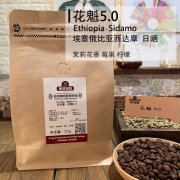
Characteristics of growing Environment of Coffee Bean Mountain Spring processing method Sidamo Fakui Coffee in Ethiopia
The area is more than 2000 meters above sea level. Few plantations are located at this altitude, which is why this naturally processed coffee has a rich fruity flavor and a sweet return of sugar. Huakui in Qianjie is from Shanquan treatment plant.

How long does it take for a barista to learn? What knowledge and skills baristas need to know?
Professional coffee knowledge exchange more coffee bean information please follow the coffee workshop (Wechat official account cafe_style) barista _ barista training _ barista skills to understand where coffee beans come from coffee beans are actually seeds in the coffee fruit that grows on the coffee tree, which looks like cherries. Coffee trees grow until they begin to blossom (similar to jasmine), but only last a few days

Introduction to the flavor description of Starbucks Arabica coffee beans produced by the method of grinding scale
Elaraby Arabica Coffee Bean Flavor description: Starbucks Arabica Coffee Bean Grinding scale method to describe the flavor description of Starbucks Arabica coffee beans grown in Starbucks Arabica coffee bean grinding scale processing method flavor description of Starbucks Arabica coffee beans growing area of Starbucks Arabica coffee bean grinding scale processing method taste description of Starbucks Arabica coffee bean grinding scale processing method flavor description of Starbucks Arabica coffee beans growing area of Starbucks Arabica coffee beans, Starbucks Arabica coffee bean grinding scale processing method flavor description of Starbucks Arabica coffee beans growing area of Starbucks Arabica coffee beans, Starbucks Arabica coffee bean grinding scale processing method flavor description of Starbucks Arabica coffee beans, Starbucks Arabica coffee beans growing area with an altitude of 600-2200 meters above sea level, a temperature of 15-24C and an annual From flowering to fruit ripening for about 7-9 months, its bean shape is long, with a strong and round wet aroma, and the coffee made from Arabica coffee is more complex.

The method of growing coffee the difference in taste between coffee beans and instant coffee
The difference between coffee beans and instant coffee is that beans cannot be melted, while instant coffee melts in hot water and blends with water. Generally speaking, coffee beans are more tasty and overripe, and the beans inside will rot away. If the beans are not ripe, the beans will not ripen by themselves. So bean pickers often go through the same tree several times to look for it. Ellipse

The main methods of growing Kenyan coffee what are the methods of Kenyan coffee
It entered Kenya in the 19th century, when Ethiopian coffee drinks were imported into Kenya through southern Yemen. But it was not until the early 20th century that the bourbon was introduced by the St. Austen Mission (St.AustinMission). Kenyan coffee is mostly grown at an altitude of 1500m, 2100m, and is harvested twice a year. To ensure that only ripe berries are picked, people must be in the forest

Introduction to the characteristics of varieties produced by the method of describing the Flavor of Ethiopian Sun Yega Snow Coffee
Ethiopia Sunshine Yega Snow Fei Coffee Flavor description method Variety characteristics of producing areas 1. Limu coffee grows between 1400 meters and 2000 meters above sea level. Wash the coffee. Excellent quality, with strong nut aromas, suitable acidity, with the intensity of wine. The annual output is 29000 tons. 2. Jima Coffee grows between 1400 and 1800 meters above sea level. Sun-baked coffee.

Basic knowledge of Coffee beans cultivation conditions of Coffee trees
There is a noun called Coffee Belt. There are more than 60 coffee producing countries in the world, most of which are located in the tropics and subtropics between the Tropic of Cancer (latitude 2326). This coffee growing area is called a coffee belt or coffee area (Coffee Zone). The annual average temperature of the coffee belt is above 20 ℃, because the coffee tree is a tropical plant, and if the temperature is below 20 ℃,

A Brief Introduction to the Grinding Degree and Roasting Degree Treatment Method of Ethiopia Sidamo Sun-baked Guji Fine Coffee Beans
Ethiopian Sidamo Shakisso Natural Country: Ethiopia Producing Area: Guji District Xiaqisuo Producing Area Altitude: 1800-2000 Processing Method: Sunning Factory Name: Qianjie Cafe Address: No.10 Baoan Qianjie, Yuexiu District, Guangzhou City Contact Method: 020-38364473 Ingredients List: Home Baking Shelf Life: 90 Net Content: 227g Packaging Method: Bulk Taste: Fragrance

Introduction to the production area of grinding scale by the method of describing the flavor of coffee growing in C ô te d'Ivoire
C ô te d'Ivoire Coffee Flavor description method Grinding scale production area introduction C ô te d'Ivoire (CotedIvoire) has never produced the best quality coffee, and the coffee produced is rarely from Arabian coffee trees. In the early 1980s, it was the third largest coffee producer in the world and is still the fifth largest coffee producer even today. In terms of the output of Robbins Coffee

Processing methods of fine coffee Costa Rican coffee production methods of Costa Rican coffee beans
The particles are full, the acidity is ideal and the aroma is unique and strong. Tarrazu in Costa Rica is one of the major coffee producing areas in the world. The coffee produced is light and pure in flavor and pleasant in aroma. Costa Rica, with its fertile volcanic soil and good drainage, is the first country in Central America to grow coffee and bananas for commercial value. Coffee and bananas are the main food in the country.